
Managing a city fleet is no small task. Between tracking maintenance schedules, reconciling costs, coordinating service requests, and keeping vehicles road-ready, the process can quickly become a logistical headache. For the City of Moorhead, Minnesota, these challenges were all too familiar. But in 2025, the city began a quiet yet powerful transformation.
Known for its collaborative culture and commitment to public service, Moorhead embraced a digital strategy to modernize how it manages its fleet, facilities, and infrastructure. At the center of this shift is Novotx Elements XS, a geo-centric asset and work management platform that has helped the city dramatically reduce staff hours, improve financial accuracy, and eliminate the stress of juggling disconnected systems. The result is a smarter, more efficient approach to fleet and maintenance management, and one that’s saving the city thousands of dollars and countless hours every month.
From Siloed Systems to Seamless Operations
Before implementing Elements, Moorhead’s departments were operating in silos. Fleet maintenance, service requests, and financial reconciliation were tracked manually on paper and across disconnected spreadsheets and financial systems. The result was inefficiency, duplicated effort, and limited visibility into asset performance and costs.
“We were doing so many administrative things manually,” said Jenica Flanagan, Finance Director for the the City of Moorhead. “It was just very siloed. We were able to talk through and collaboratively come together asking, ‘What’s a better way to do this and save everybody time?’”
That question led to a citywide rollout of Elements XS in early 2025, starting with fleet and equipment maintenance workflows. For Tony Manzella, Fleet and Maintenance Supervisor, the impact was immediate. With nearly 1,000 fleet and equipment assets under his oversight, having a centralized system for long-term planning has been essential.
“The part I use probably the most is the asset replacement tool,” Manzella said. “It’s how we arrive at our five-year plan.”
By consolidating asset data and forecasting replacement costs, Moorhead has moved beyond reactive maintenance and into proactive, strategic planning. The platform has helped departments coordinate more effectively, reduce manual tracking, and make smarter decisions about budgeting and resource allocation.
“It’s a lot to keep track of,” Manzella added. “Elements helps tremendously.”
Time is Money
One of the most immediate impacts has been time savings. Month-end reconciliation, which previously took up to three days, now takes just three hours. That shift alone is estimated to save the city over 34 hours a month, and nearly $15,000 annually in staff time.
“It used to take me two weeks to reconcile costs,” said Nichole Parr, Office Coordinator for Public Works. “Now it takes literally a few hours.”
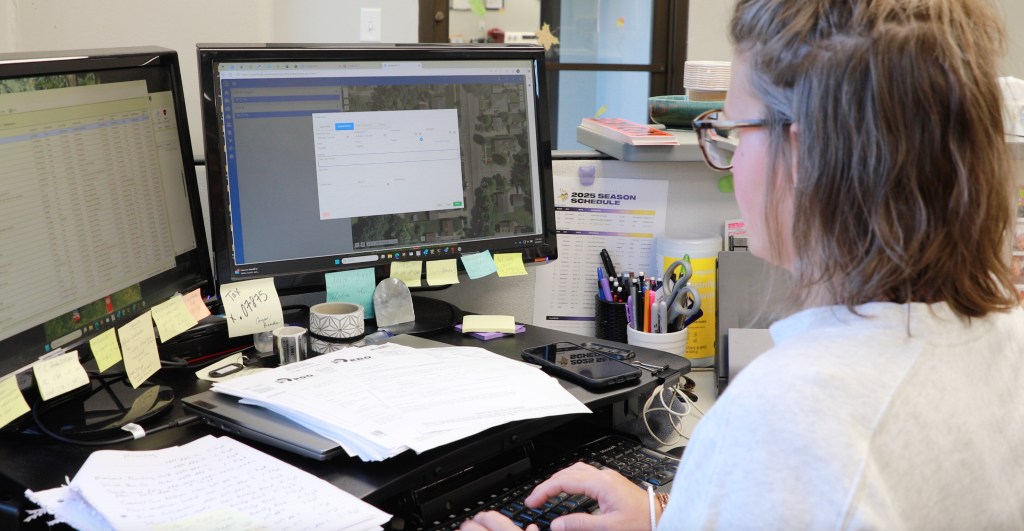
“It used to take me two weeks to reconcile costs,” said Nichole Parr, Office Coordinator for Public Works. “Now it takes literally a few hours.”
Diesel tax reporting, once a full-day task, has been reduced to an afternoon. Mechanics now log work orders and inventory in real time using tablets, eliminating the need to recall and enter data at the end of their shifts.
“They have iPads… It’s more accurate because you can log things as you’re doing them,” Parr added.
Financial Clarity and Operational Intelligence
Fleet billing has become more accurate and auditable, with all costs tracked in both Elements and the city’s accounting system. Integration with Power BI allows staff to visualize fuel usage, inventory levels, and capital planning in real time.
“We’ve been able to use Elements plus Power BI to reconcile monthly between the two systems,” Flanagan explained. “That has been a big time saver.”
The city also tracks license plate tab renewals and vehicle upfit costs, such as plows, radios, and toolboxes, within Elements. This improves five-year fleet planning and reduces the risk of missed deadlines and critical maintenance.
“I didn’t have any real way to track it… Now I do,” said Parr. “It’s a huge headache I don’t have anymore.”
GIS Integration: From Maps to Maintenance
Moorhead’s GIS team, led by Michael Krueger, has played a pivotal role in embedding spatial intelligence into everyday operations. Through Elements XS, GIS is no longer just a mapping tool, it’s a real-time operational asset.
Work orders now automatically update GIS features, such as sewer jetting dates and sign installations, giving city staff instant visibility into infrastructure status. But the impact goes beyond engineering and utilities. GIS is also transforming how Moorhead’s mechanics manage fleet operations.
“Our full fleet dataset is a fixed asset repository in Elements,” Krueger explained. “We have GPS units in all our vehicles that share unit IDs. So, if a mechanic needs to locate a vehicle that broke down, they can pull up the fleet map in Elements and find it instantly.”
Mechanics now use tablets to access GIS-enabled maps, locate vehicles, check inventory levels, and log work orders directly from the shop or out in the field. Whether they’re responding to a breakdown or performing routine maintenance, they have instant access to the data they need.
“They enter work orders right in the shop or out in the field,” Krueger said. “If they need to check inventory, oil filters, engine oil quantity, it’s all tracked in Elements. GIS plays a big role in making that data accessible.”

“They enter work orders right in the shop or out in the field,” Krueger said. “If they need to check inventory, oil filters, engine oil quantity, it’s all tracked in Elements. GIS plays a big role in making that data accessible.”
A Culture of Collaboration
Moorhead’s success with Elements is rooted in its team-first culture. Departments work together to refine workflows, share data, and support each other through the rollout. The city’s Asset Management Steering Committee ensures that change is managed thoughtfully, with buy-in from every corner of the organization.
“The whole team’s really bought into it,” Flanagan said. “It’s more about the team, the bigger why.”
Parr echoed that sentiment. “We’ve gotten to know each other better… Elements is connecting us.”
IT Strategy and Long-Term Vision
From an IT perspective, Elements XS has helped Moorhead reduce software costs, simplify device management, and improve the user experience for staff across departments—including mechanics in the fleet division.
“We support over 135 different applications,” said Corey Delorme, IT Director. “When we found out Elements could be a common platform across departments, it was very exciting.”
The cloud-hosted solution has reduced strain on infrastructure and enabled broader deployment of tablet-based devices. For mechanics, this shift has been especially impactful. Instead of relying on desktop computers or handwritten notes, they now use tablets to log work orders and access inventory in real time.
“As we rolled this out to our mechanics, they were using tablets to enter part numbers while working under vehicles,” Delorme explained. “We had to adjust timeout settings to make sure they weren’t getting logged out mid-task. It was a small change, but it made a big difference in how they work.”
This kind of responsiveness to user needs has helped Moorhead’s IT team ensure that technology supports, not hinders, daily operations. And with Elements, the city has already replaced four legacy applications, with more on the way.
Elements has replaced, or will replace, applications with an expected savings of over $20,000 annually.
In addition to the tangible cost savings of applications, Elements has saved countless staff hours and eliminated decentralized spreadsheets across many departments.

Looking Ahead
Perhaps most importantly, Elements supports long-term asset planning, 10 to 40 years into the future. That aligns with Moorhead’s leadership philosophy of leaving systems and infrastructure better for the next generation.
“If we can put the city’s assets in a position where the next person can step in and have all the tools they need, then we’ve done our job,” Delorme said.
Moorhead plans to continue expanding Elements into new departments and workflows, including police, fire, and facilities. The goal is not just operational efficiency, but a smarter, more connected city.
“We’re just scratching the surface,” Flanagan said. “I see that longer-term vision where we’re going to have this tool to make long-term financial decisions.”